Thursday, 3 April 2014

Thank god it's April; with a silvery surprise.

The trout season officially started on Tuesday. My fishing season officially started today. I've been waiting what seems an age for this week to come round. Luckily my shifts have fallen rather well, giving me back to back afternoons.

I arrived just after one. I had, in my mind, to try an area that I didn't touch at all last year. This part of the river generally runs with more pace and vigour, it looks to have been spared any heavy modification. Running though parkland it is lined with large trees; a tight spot but easily fished with a short rod.

As it happened I stopped off at the very top of the section. Looking at the river it was running clear and with a good push of water. An area that is normally quite shallow - only holding the odd fish - had much more depth, crucially it held actively feeding fish.
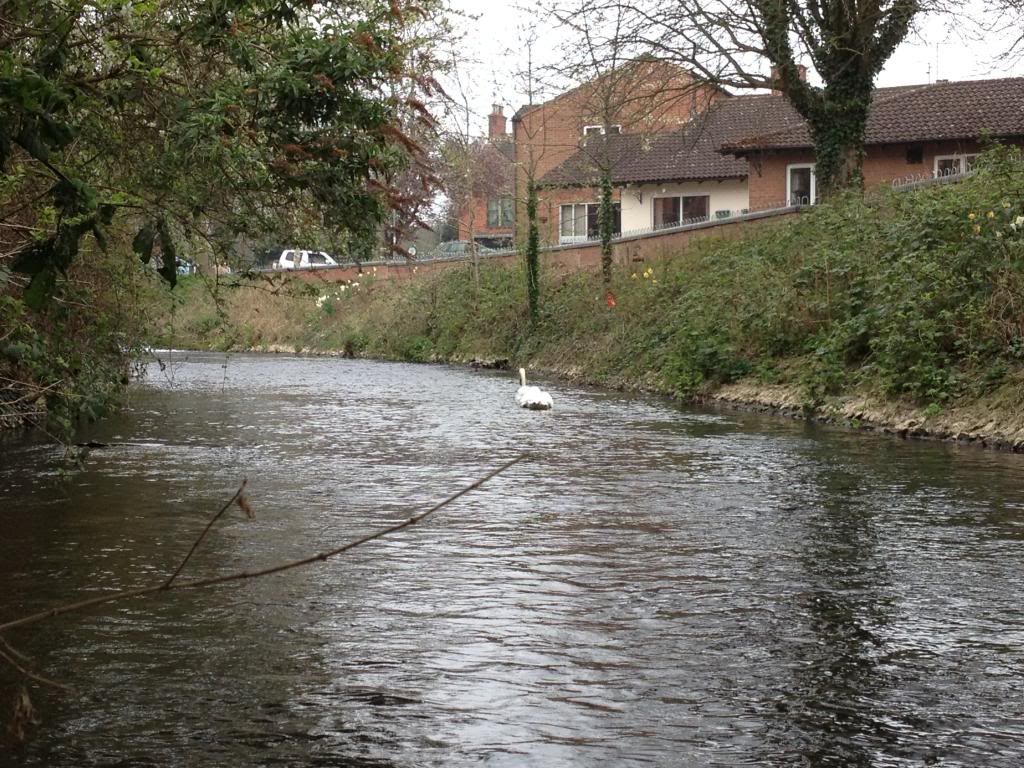
Looking upstream, the weir is just around the bend.
I walked along the path to a point below the run. Where I entered the river was shallow and held no fish. Slipping into the water, I made my way across to the opposite bank, my intention was to tackle up slowly whilst observing the water ahead.

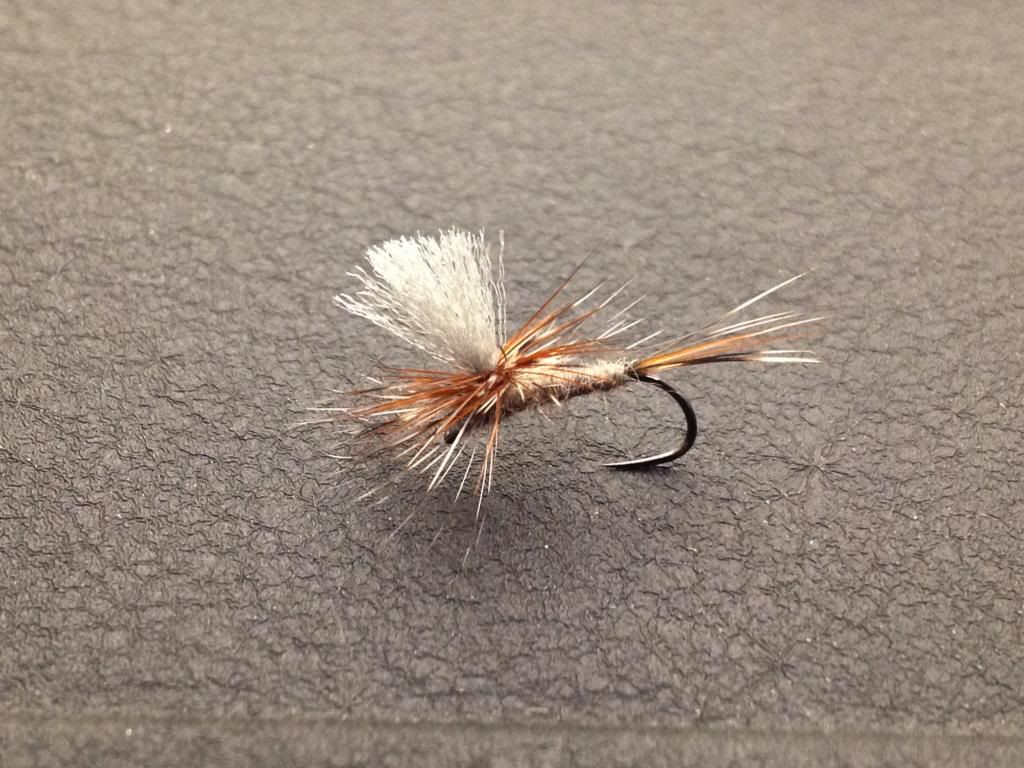
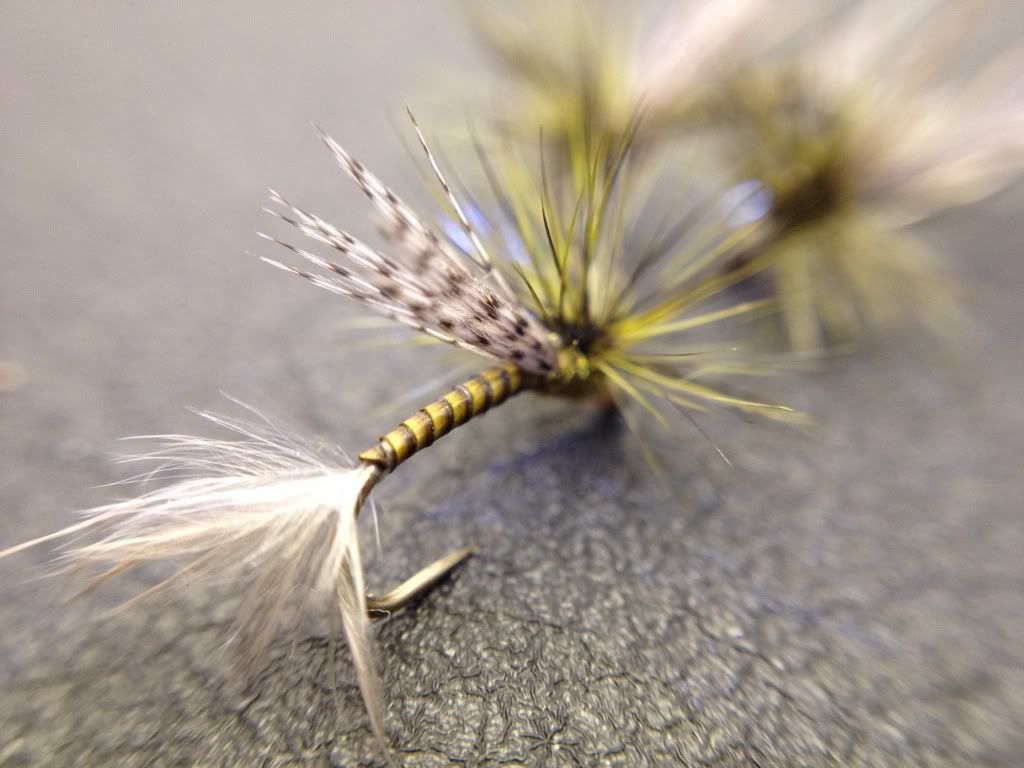
I saw a couple of duns hop-skip their way downstream, and with more hope than anything I tied on a Barbour paraloop dun and an OE baetis nymph. As I started fishing it quickly became apparent that my choice of dry-fly was questionable, not because I felt it was the wrong, but because I found it difficult to see drifting down. I tried, but it was no use, I had no confidence not being able to see the fly properly; as I was essentially fishing the duo method I needed to see the dry-fly to register any takes on the nymph.

A quick change to a fluro-pink-posted KlinkhÄmer saw an instant visibility improvement. I added a quilled river Diawl-Bach to the leader as the klink could support another fly. The change brought a needed boost in my effort, I finally felt like I was fishing properly. Unsurprisingly, I then caught a fish. It's amazing what difference a bit of confidence does.

The first was small at around six inches, it fell to the Diawl-Bach. I continued up the run and it wasn't long before the next fish came. This one was bigger at around ten inches; it had the brightest white edges to its ventral and anal fins.

I was now getting to the top of the run which starts as a small weir. I hadn't planned to fish this part but saw no reason not to. A tungsten bead JP caddis pupa was the only fly change, as I needed to get down in the faster, deeper flow.

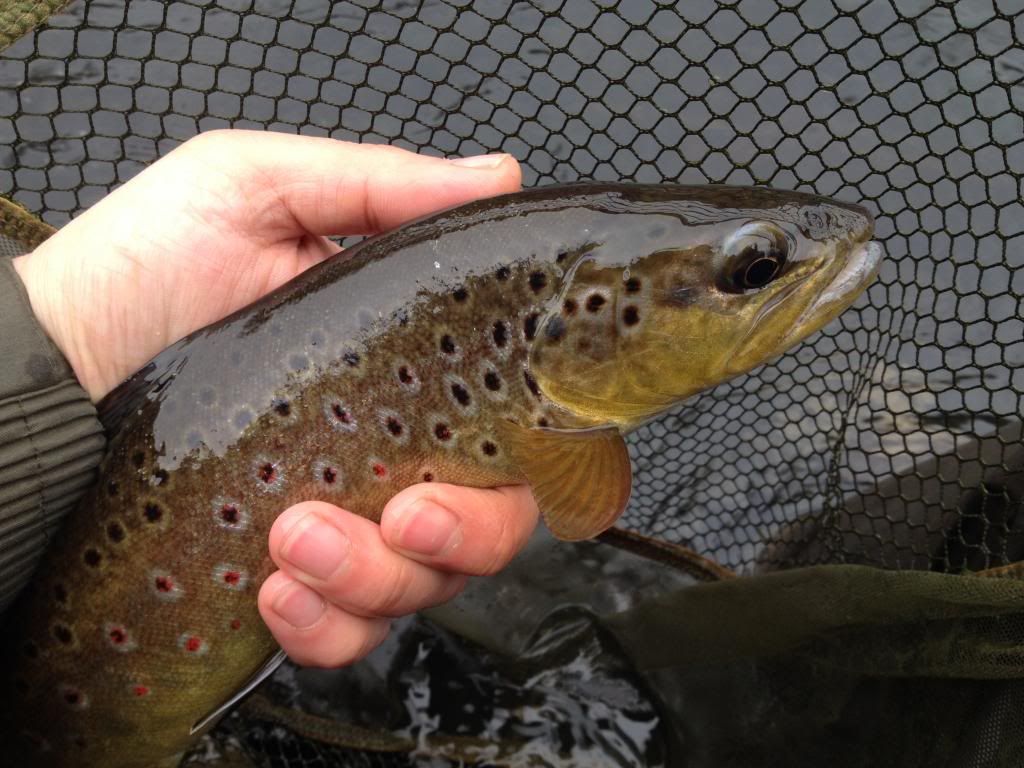
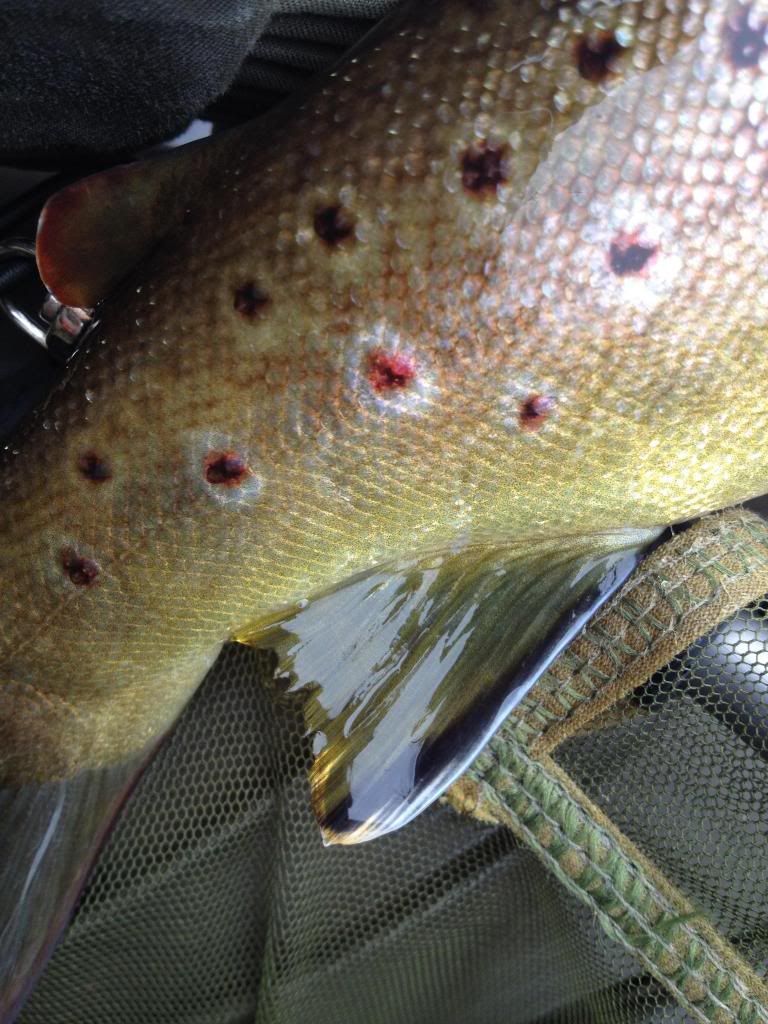
Working the edge of the current seems, the klink was violently pulled under. I became attached to a leaping silver fish. I instantly thought rainbow, only because I had been told by a local last year that he had caught them although I have never seen nor caught one myself. As I netted the fish I was greated by a bright, silvery trout, not a rainbow certainly, but surely not a sea trout?! The fish was immaculate, if a little hollow. I have never caught a trout that was such a bright silver. I know that the EA, along with other bodies, are working to improve the accessibility of rivers flowing into the wash to migrating sea trout. So it could be possible.
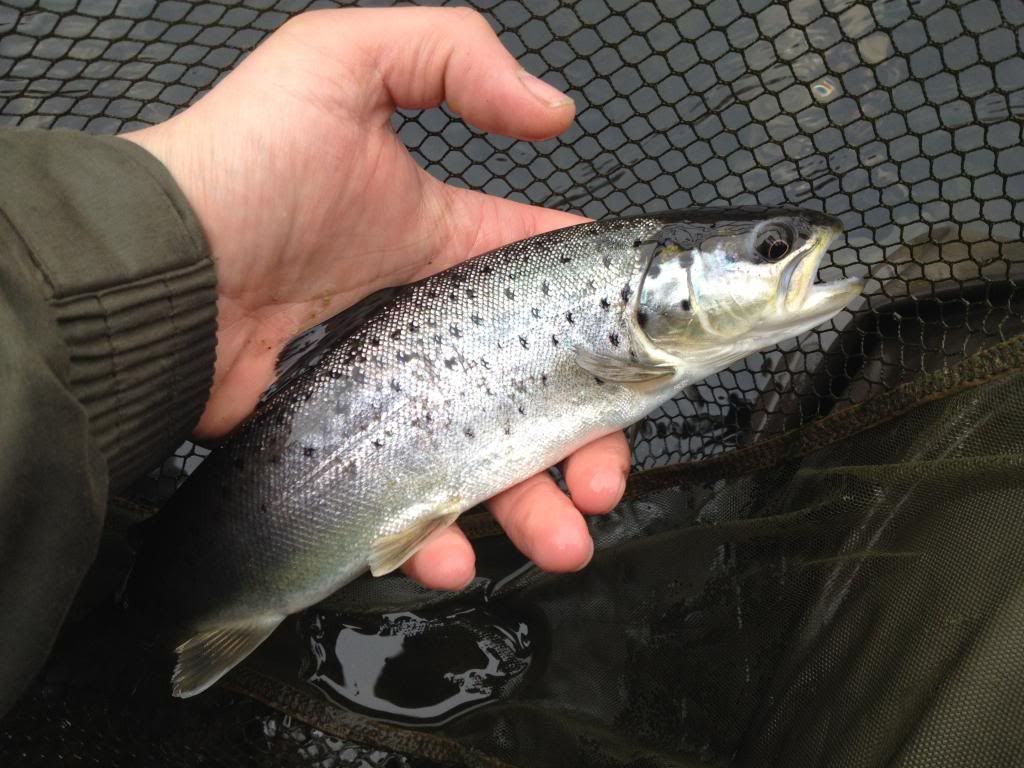
Bright silver; I have never caught a trout in this river that wasn't golden yellow.
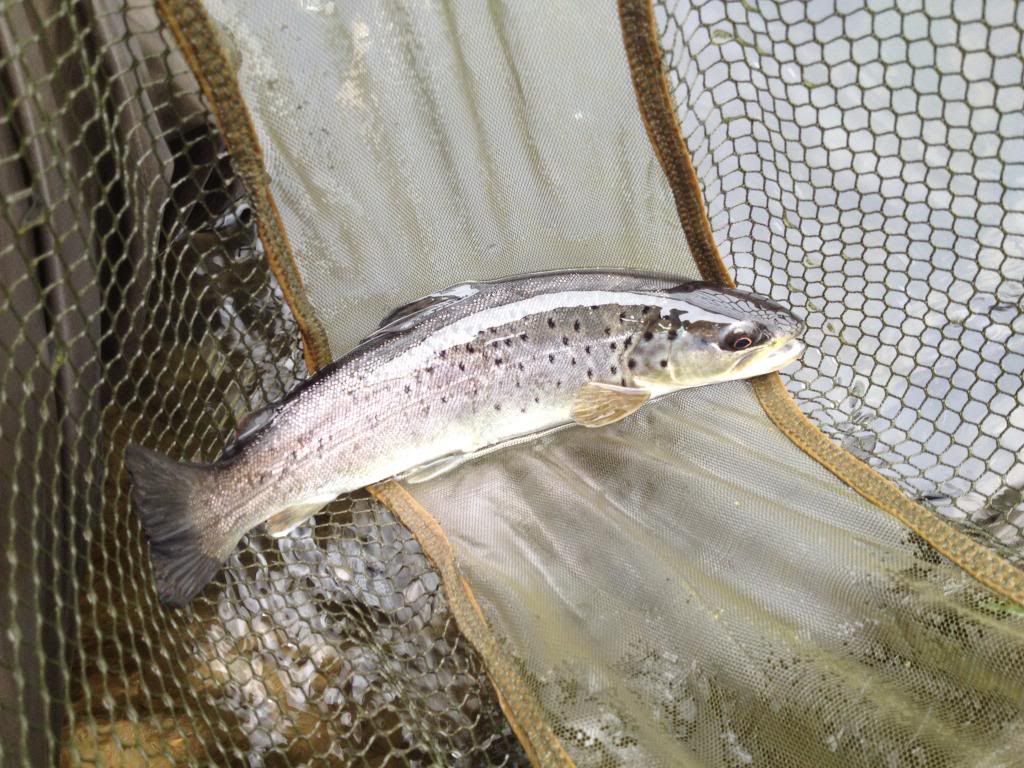
Continuing to fish the pool I caught one more trout. This was the biggest by far, a good fifteen inches long and again hollow in the belly. It fought well pulling line of the reel, this along with the last fish fell to the JP pupa.
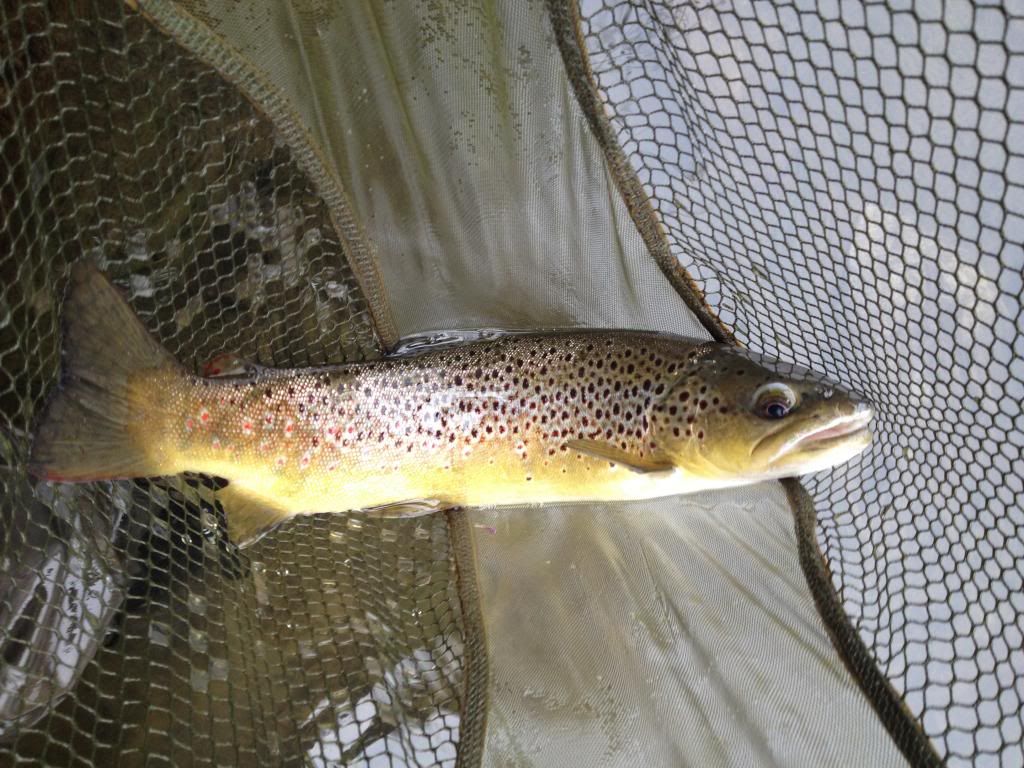
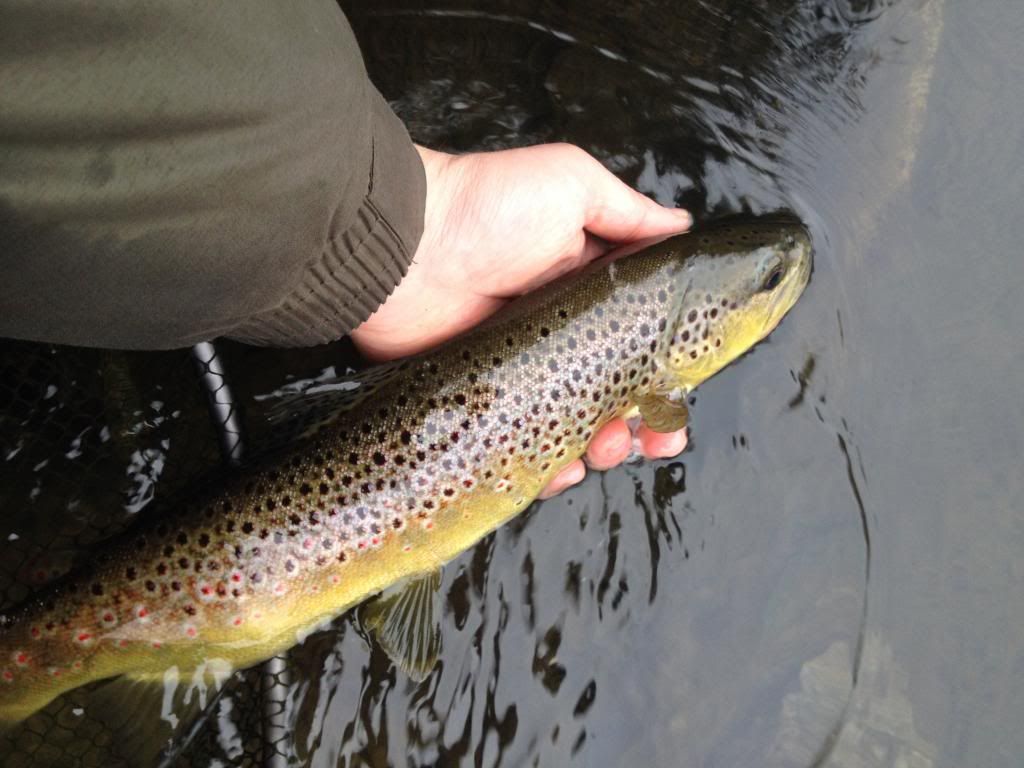

After a slow, frustrating start, I finished the afternoon happy with my efforts; a little disappointed I didn't catch on a dry, but I only saw two rises and less than a handful of duns. Tomorrow I'll be going where I originally intended to today.
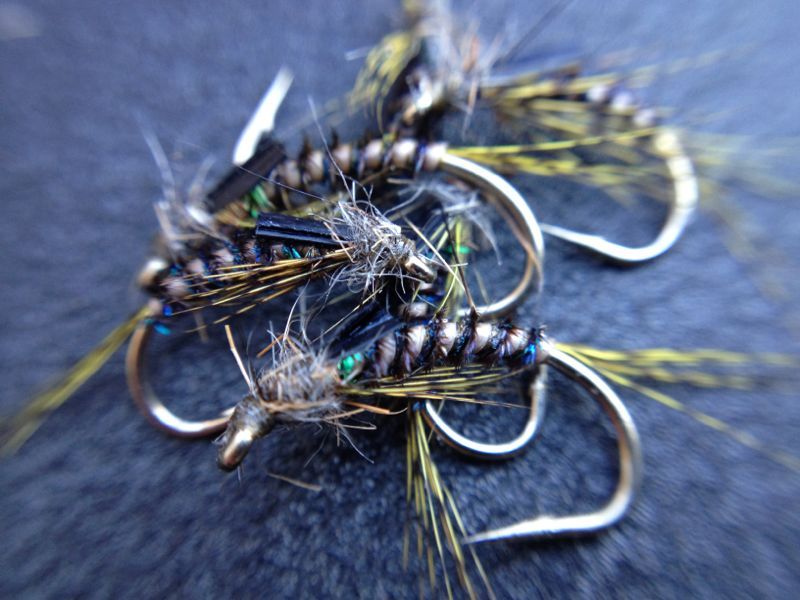
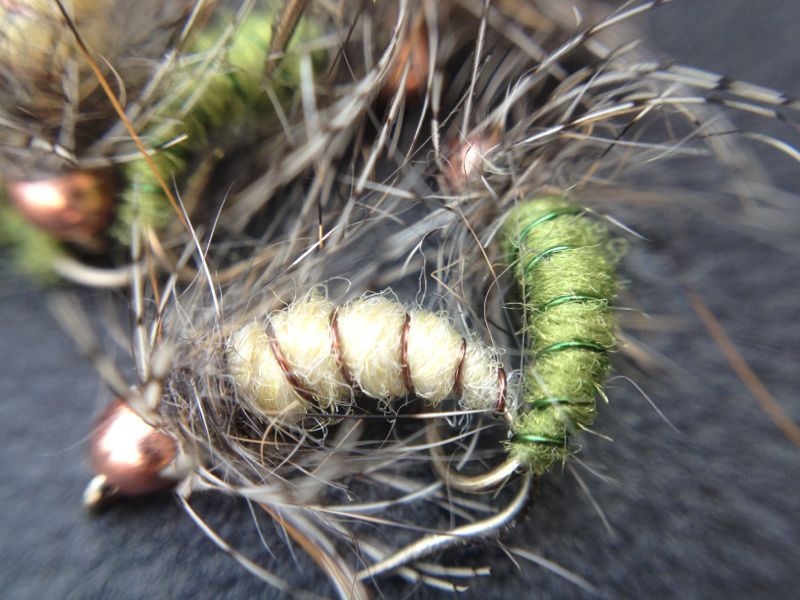
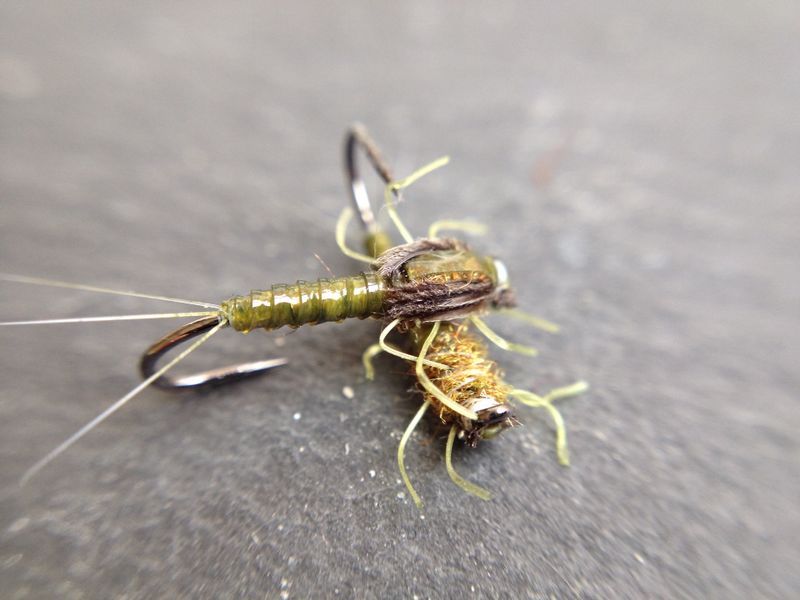
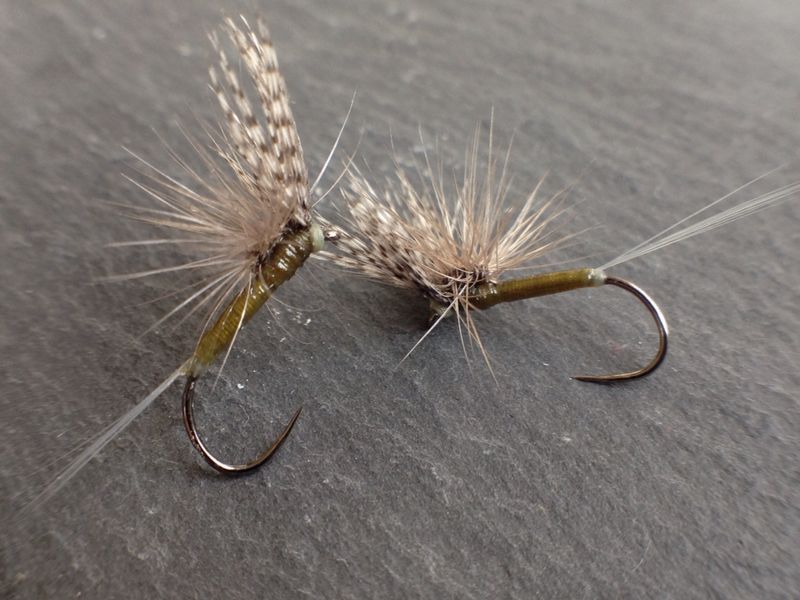
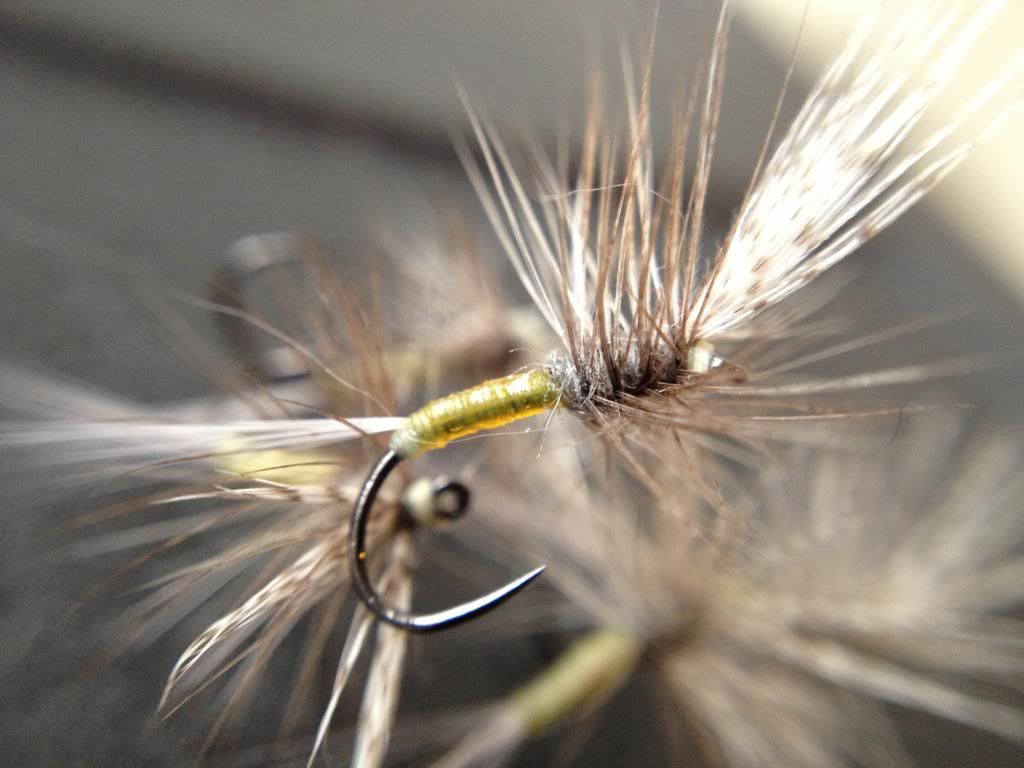
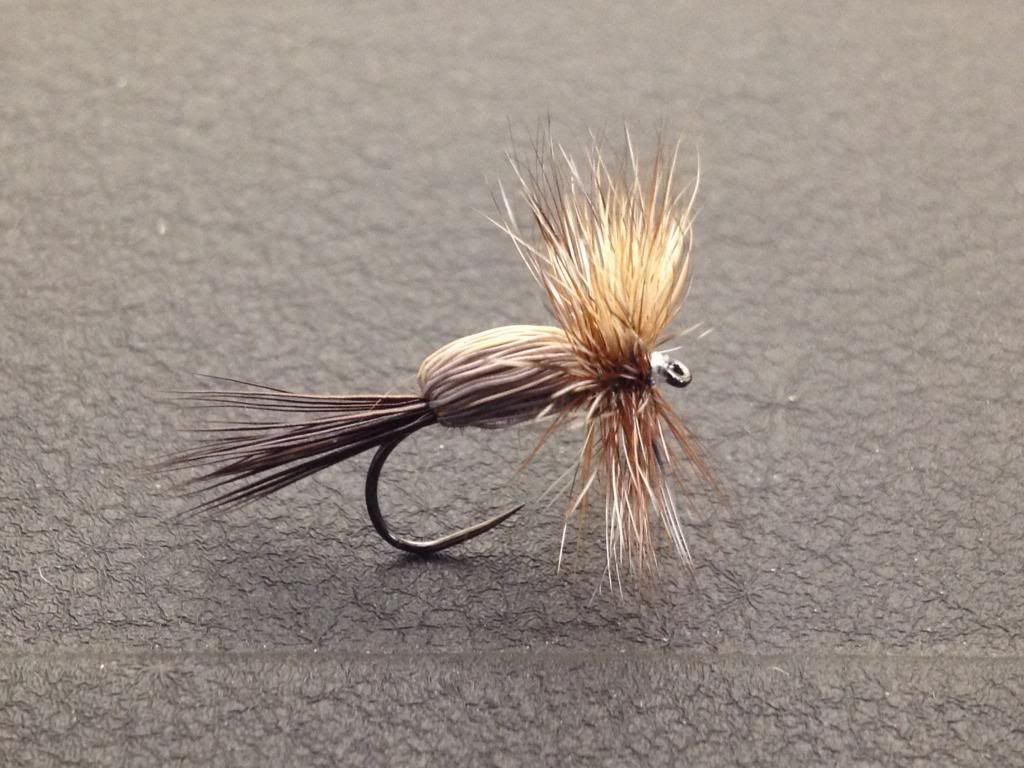
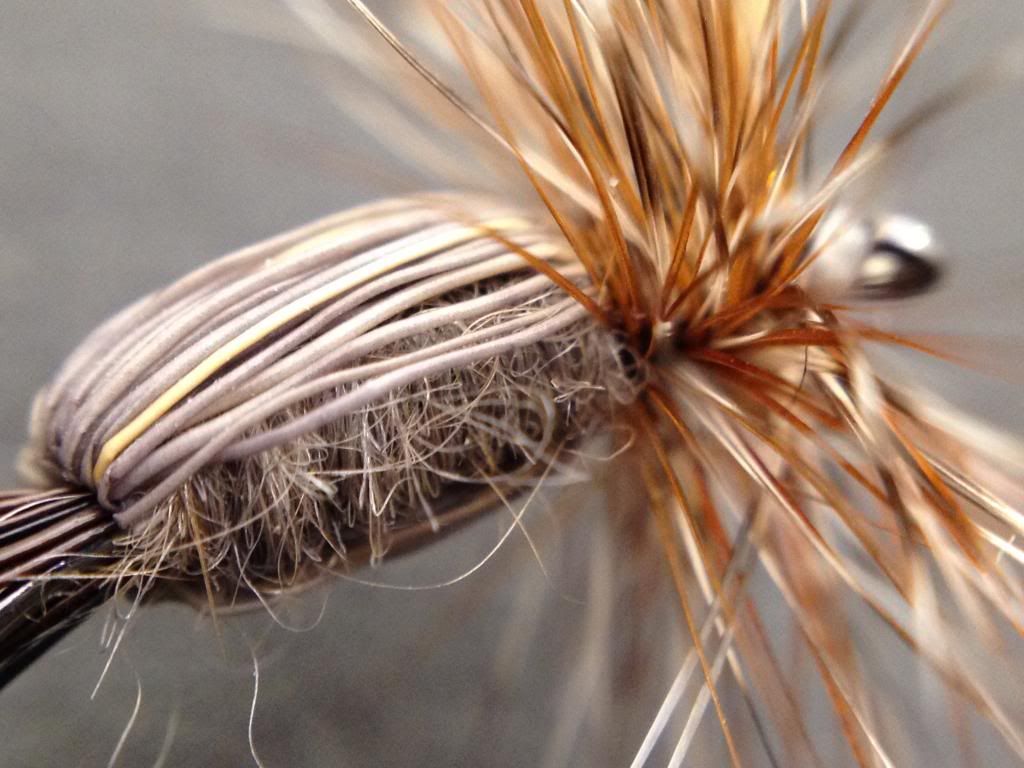
Quilled river Diawl-Bach
JP caddis pupa
OE baetis nymph
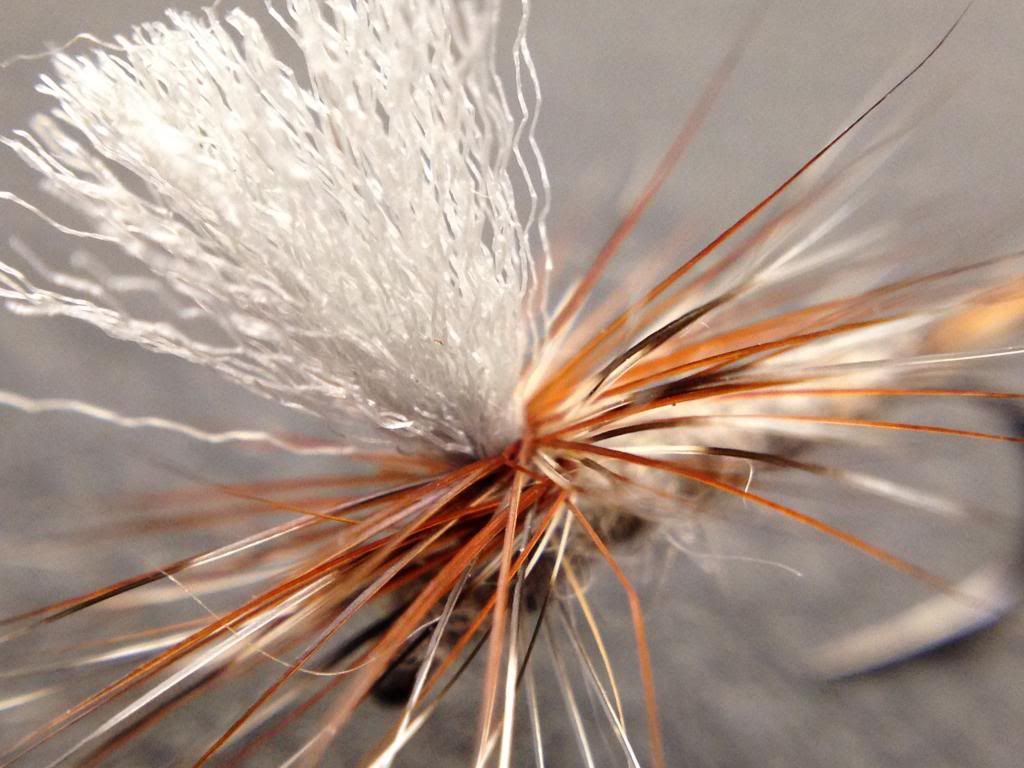
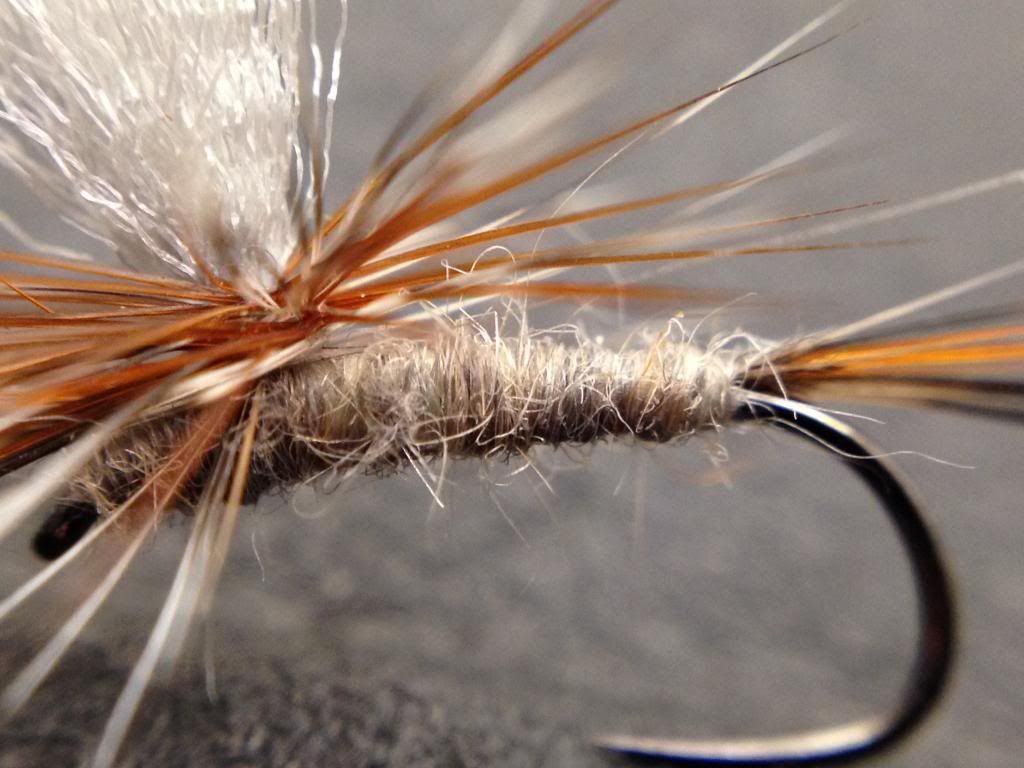
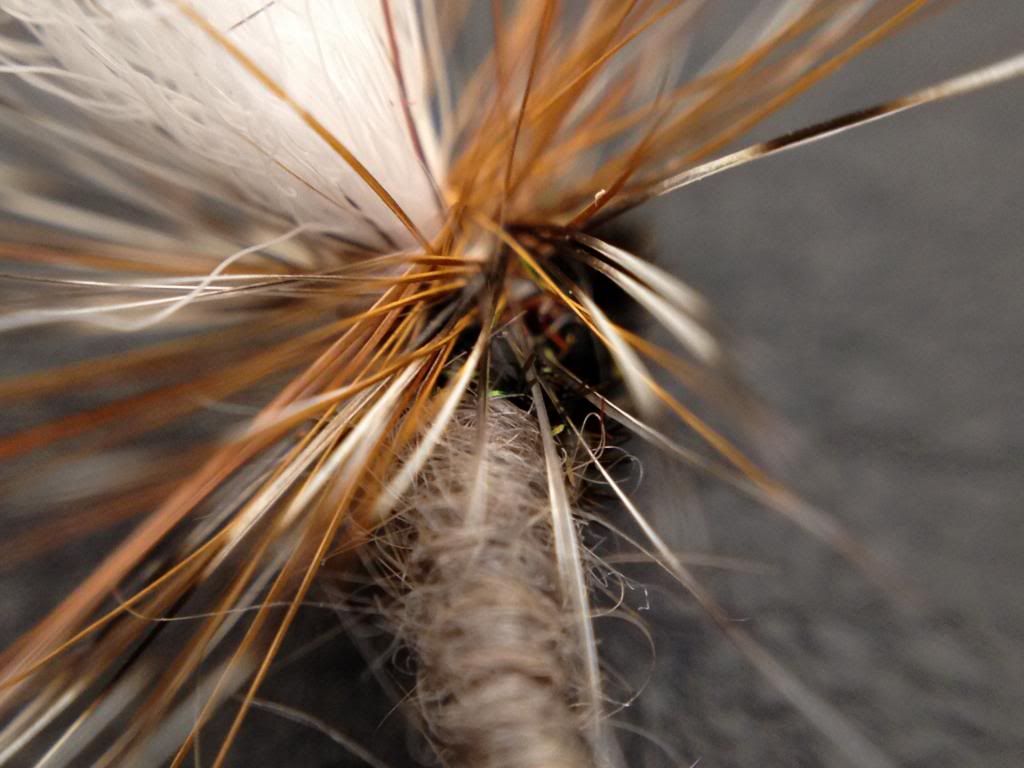
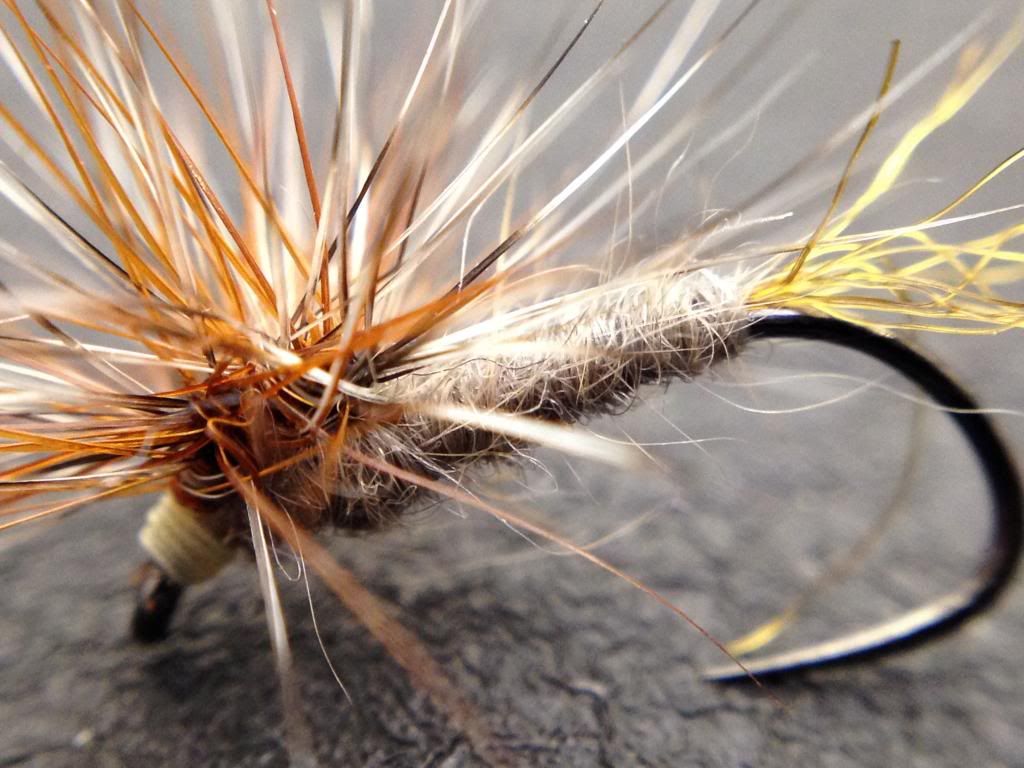
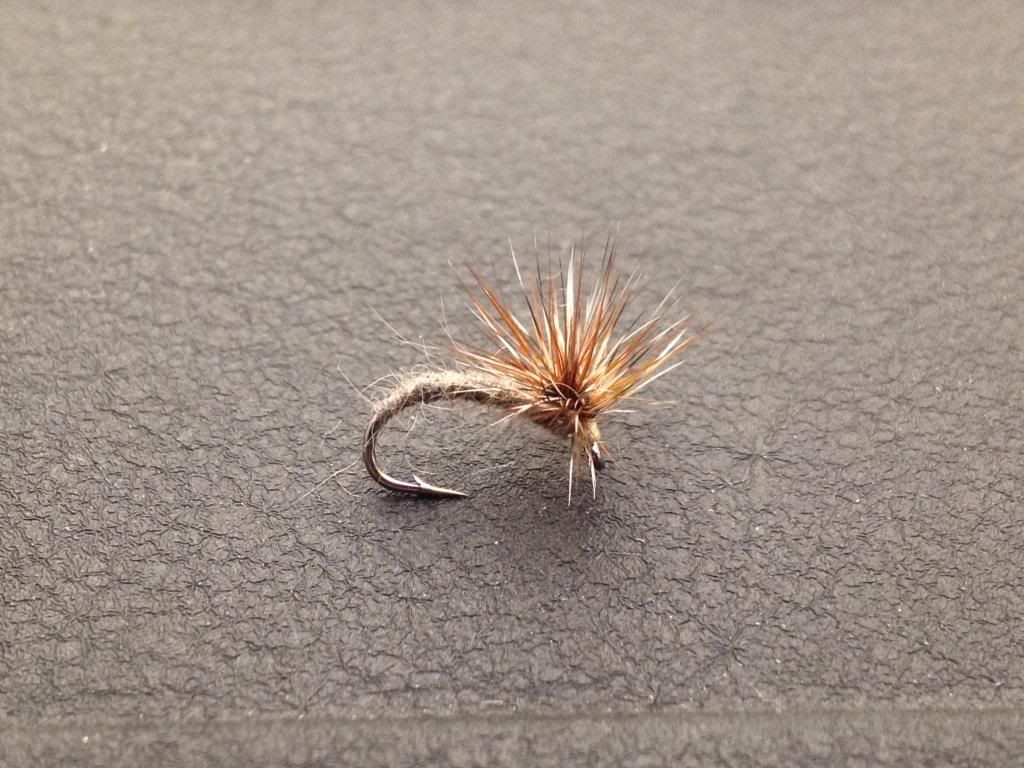
Barbour paraloop dun

Tuesday, 1 April 2014

A fly with my name on it.

A benefit from buying a mass collection of magazines that you've not read before, are the numerous new articles and flies. One such article was in February 2012 edition of FF&FT. An article about long lost north country flies, revealed to me a fly with my surname attached to it. Unfortunately it wasn't one of my relatives who invented the fly, although my origins do lie in the North of England.

The fly is called Lupton's Fancy. Phillip Lupton was the flies creator along with Derbyshire fly-tyer Roger Wooley. Born in Middlesbrough in 1894, he eventually moved to Harrogate where he became a member of Harrogate Fly-Fishers club. Lupton's Fancy was used and became popular on the Harrogate FFC beats of the River Nidd.


Tail: Three wisps of light dun hackle
Body: Yellow silk dubbed with mole
Hackle: Light dun cock
Head: Peacock herl

I have used a Daiichi 1110 straight eye dry fly hook available at Funky Fly Tying here.

Thursday, 20 March 2014

What I hope to be using in two weeks.


Unlike my Northern brethren I haven't yet started fishing for trout. I have two weeks to go and I'm getting a bit feverish. I've had one session so far this year; I'll blame the weather for most of it. Things have been much more settled recently, the leaves are unfurling, my peach trees have been in blossom for a couple of weeks already. It seems certain that we won't have a repeat of last years unreasonably cold spring and that adds further to my anticipation.

As I live around an hours drive from most of my fishing I haven't spent any time near a river. I sit at home or work dreaming that the large dark olives have been hatching and steadily increasing in numbers as we head towards opening day.

I am about to join a club, giving me access to many miles of wild trout and grayling on three different rivers. This is the first time I will have been a member of a fly fishing club, I can't wait for the new opportunities that await.

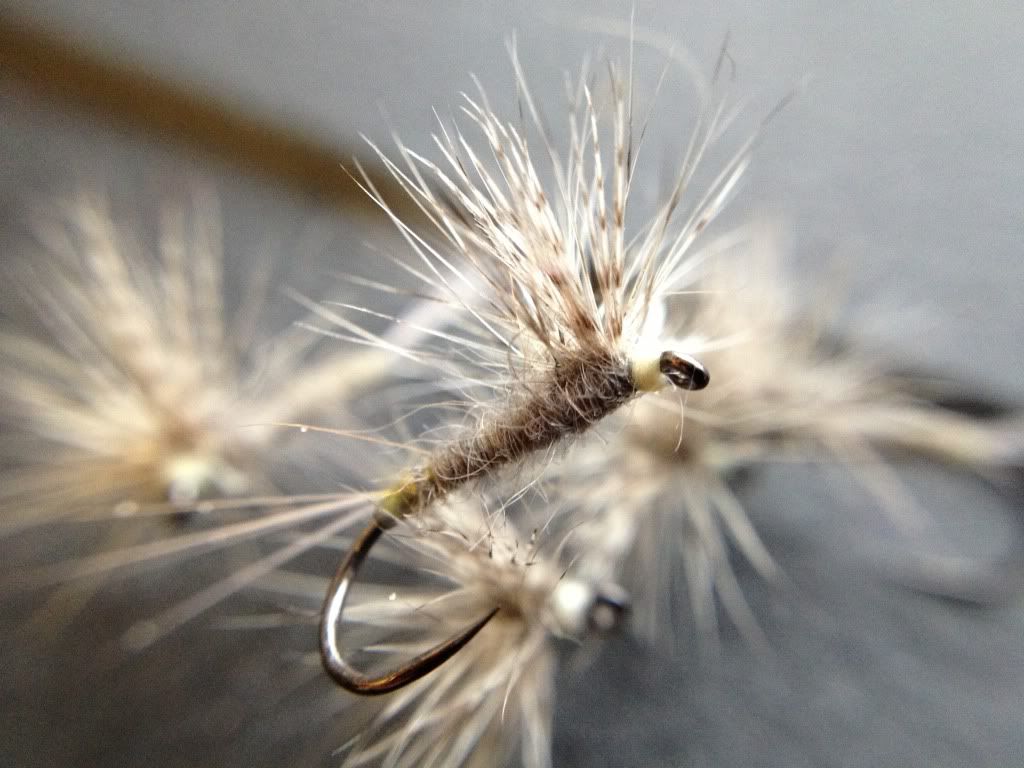
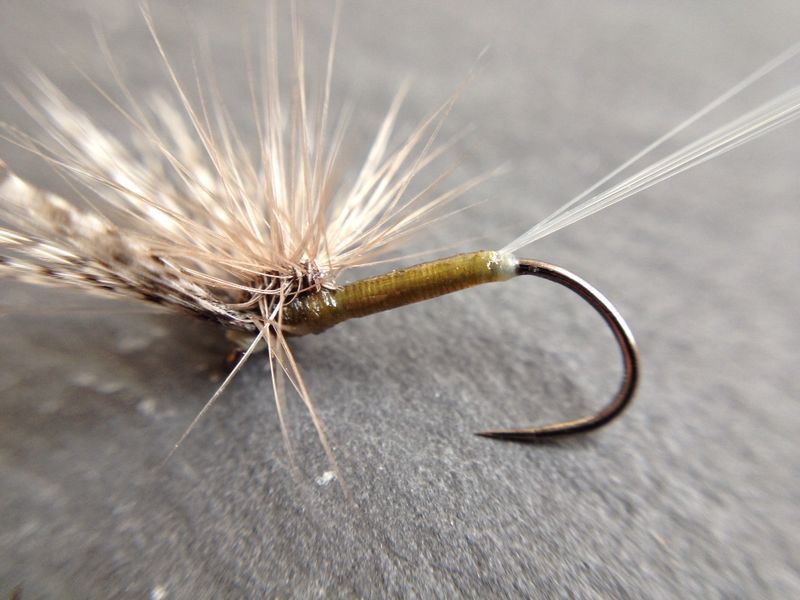
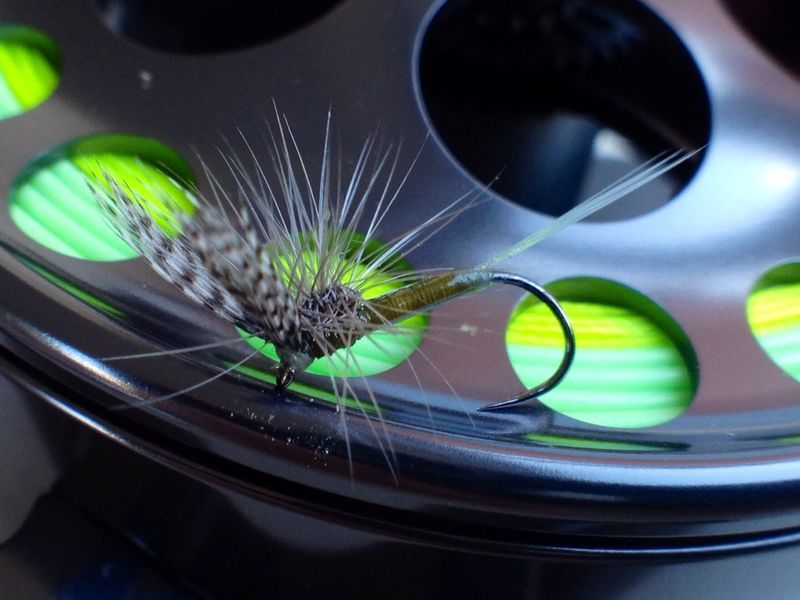
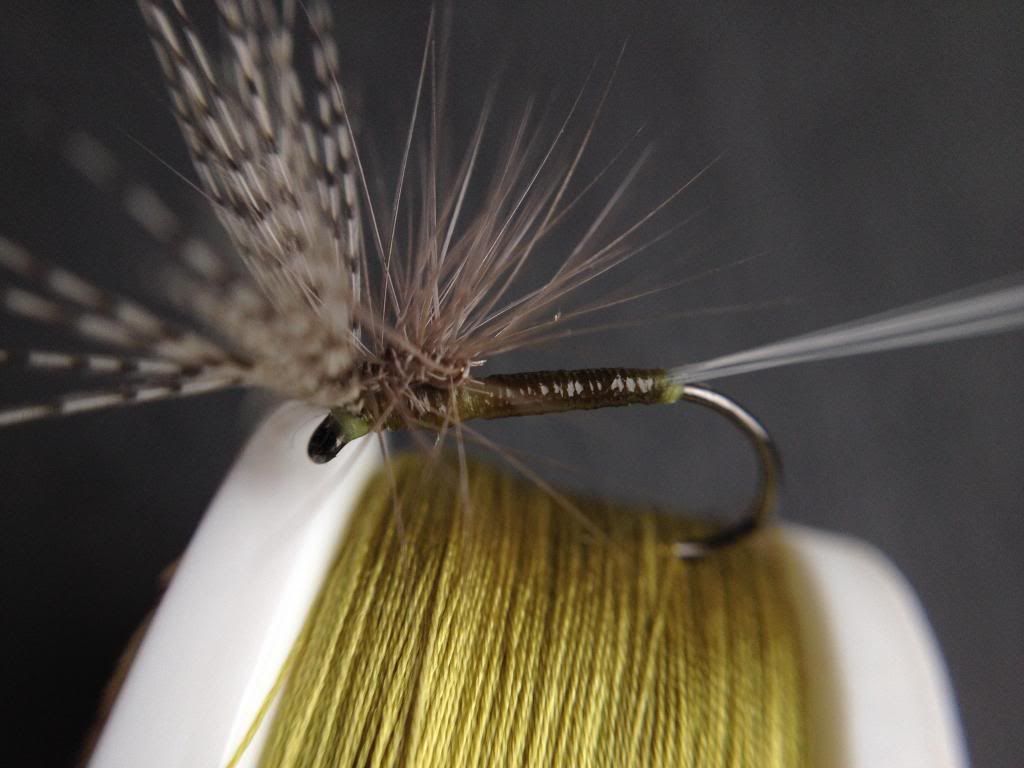
The Barbour Paradun
I've been busy tying up LDO imitations with the main one being a fly I've called the Barbour Paradun. I had already revealed this fly on this blog and had called it the wax bodied olive dun. This fly is the amalgamation of a couple of patterns. I am a big fan of Peter Hayes' flies; I have used them for a long time. As I've said before the PhD is one of my favourites. Another fly is the Muskrax.

 
The Muskrax showing it's silk abdomen and the PhD with it's paraloop hackle, mallard wing.

Essentially I've taken the shape of the PhD and instead of the dubbed body and thorax I have used an all silk body soaked in liquid wax. The muskrax has a silk abdomen soaked in wax so I see no reason why the whole fly can't have a silk body.There is another very well known fly that features a silk body; the greenwells glory of course. This adds further weight to the assumption that the Barbour Paradun will work very well. The wax is by Veniards, I don't know of any other suppliers. Just to note with the liquid wax; it needs a couple of coats and it dries to a tacky finish, it won't come off the fly but allow it a couple of days before putting them in your fly-box.


Colour wise I've narrowed it down simply to two colours, light and dark olive. The silk used is pearsals silk in one colour, yellow. To get a darker fly I pull the silk through cobblers wax, incidentally just as you would when tying the greenwells. The liquid wax is coloured too, a rich yellow olive which also helps to colour the fly. 

The fly itself is simple to tie. The tail is made up of micro-fibbets, medium dun and dark dun for light and dark flies respectively. The hackle is tied in the normal paraloop way, light and medium grey dun are all you need. Mallard silver flank is used for the wing. Tied at the front and split into a V by the thread used for the paraloop post. In the absence of mallard dyed medium dun, I have used a marker pen to colour the wing on the darker version. As yet I don't know how colourfast it is.

Aside from the light and dark versions I have tried a couple of other colours I bought at the BFFI. I have a nice light(ish) olive silk that may mean I won't need to pull the yellow through cobblers wax thus speeding up tying. The other colour is a yellow olive.

The new colours give some interesting results. The light olive silk comes out a little darker than the yellow silk pulled through cobblers. The yellow olive silk turns a dark rich brown which may not be entirely useful for baetis imitations but a useful colour to be aware of.

I can't wait for my first afternoon on the river, fingers crossed I'll get to tie a dry-fly on.


Monday, 10 March 2014

First session of the year, last for the grayling.....for now.

Things have been hectic. I have finally moved house; I will never move again. I can't recall an experience that left me so frustrated with people who are paid to do a job, yet are seemingly incapable of doing it. I digress.

Fishy things have been slow since the new year. I had an aborted half-arsed attempt at lure fishing on some of the local drains during the first week of the year. The wind was incessant and bitter. The sheer amount of rain this winter limited my options as far as fly fishing was concerned. My only grayling river has been a consistent brown colour whatever the level. I became despondent; fishing moved well down the list of priorities.
At the BFFI with Ant77

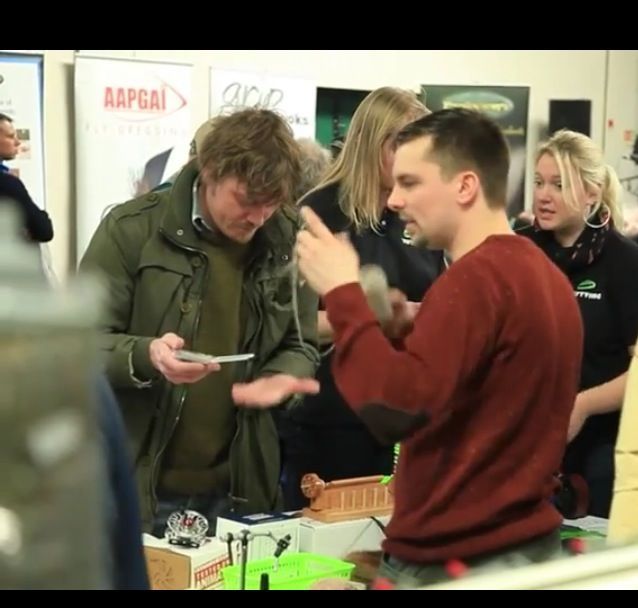
I had a great day at the BFFI on the 8th February, I met a few forum members and others who don't frequent the boards, thanks to Toby at Funky Fly Tying for the invite. I haven't tied a fly since BFFI, I'm hoping to get into the swing of things this week. My first fly fishing trip of the year on Saturday should have provided the impetus I need.

I was invited by Mike to fish up in Dovedale. A river I have never fished before, it reminded me of the Derbyshire Wye. Only slightly bigger in size than my own rivers but with much more velocity in flow, the river was slightly coloured and pushing through well.

This spring is in stark contrast to last years. I had my fingers crossed for a LDO hatch that might provide a fish to a dry-fly.
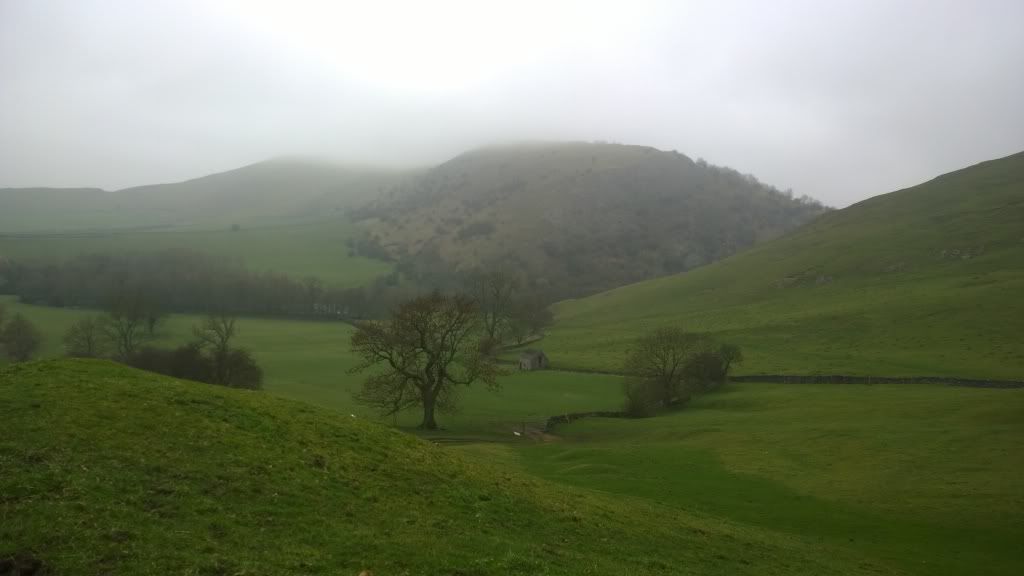
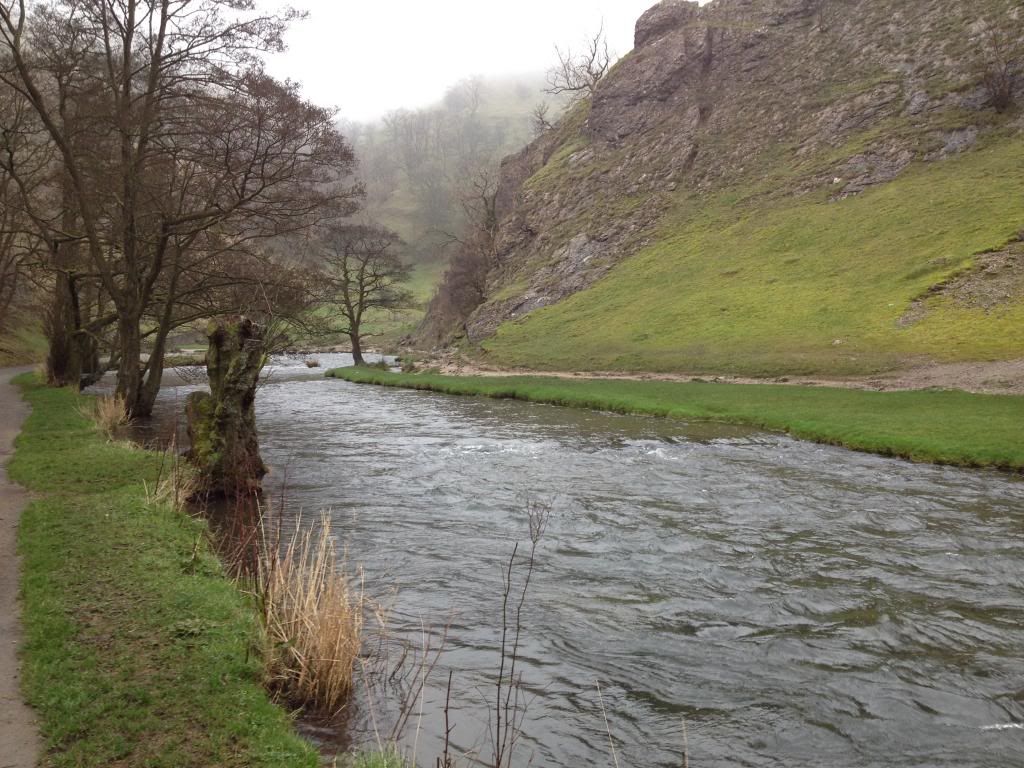
The view that welcomed my arrival, the river running along the bottom of the valley along the trees.
The day started cold and misty, the view of Dovedale as I came round the corner was spectacular. Nothing much to see in my home area save for twenty miles of uninterrupted views in all directions. Mike was already in the car park waiting for me when I arrived, he had kindly pre-paid for my parking ticket. I was salivating as I looked at the river whilst getting out of my car. Mike and I caught up and chatted with a gentleman who was also fishing.

Dovedale is very popular with tourists, Mike suggested while it was early and still quiet that we try an area where the path ran alongside the river. Later on in the day there was a constant stream of traffic on the footpaths. I chose a tantalising run that flowed along our own bank. Half a dozen trees lining the bank made me conscious of my casting. I tied on a red tag variant bead head on the point; this was a size 12 grub hook with a 2.8mm tungsten bead. The dropper was a size 14 Utah killer bug.

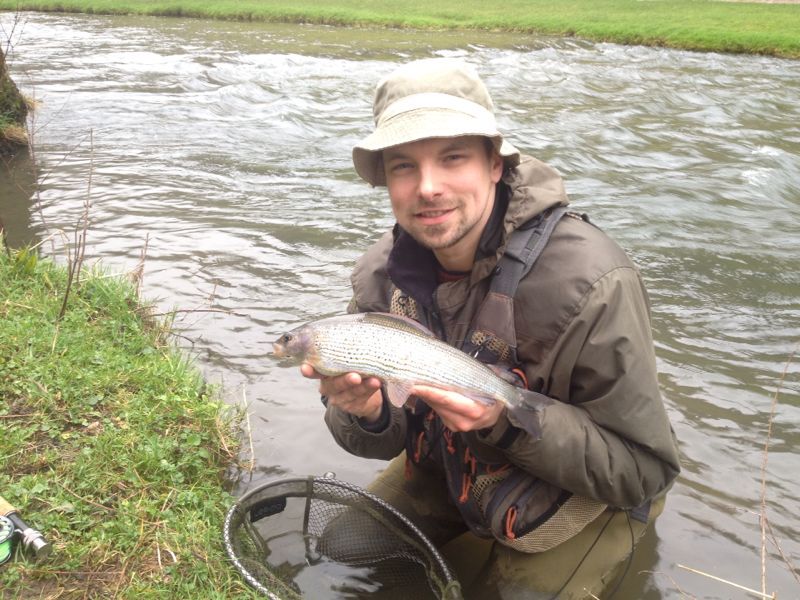
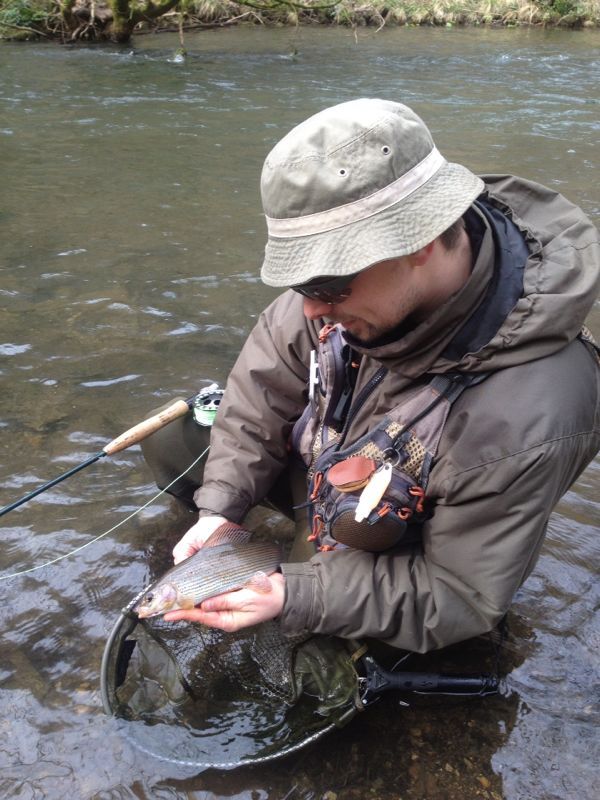
Mike left me and went further upstream. I had been fishing for less than five minutes when I hooked a fish. Its instant gyrating told me I had hooked a grayling and it felt a good fish. A great fight which took me into a fast run just below where I hooked it. Before I netted the fish Mike had disappeared round a corner. As the fish rested I asked a couple who were walking if they would mind asking Mike to come back. As I was waiting for Mike to come back JT and Woz walked past and had a quick chat before moving on. Mike arrived having also had a chat with them and I got some pictures of the grayling. It was by no means big, but it was bigger than what I normally catch.

My first grayling, we reckoned it was around a pound and a quarter.
They always look smaller in the pictures.
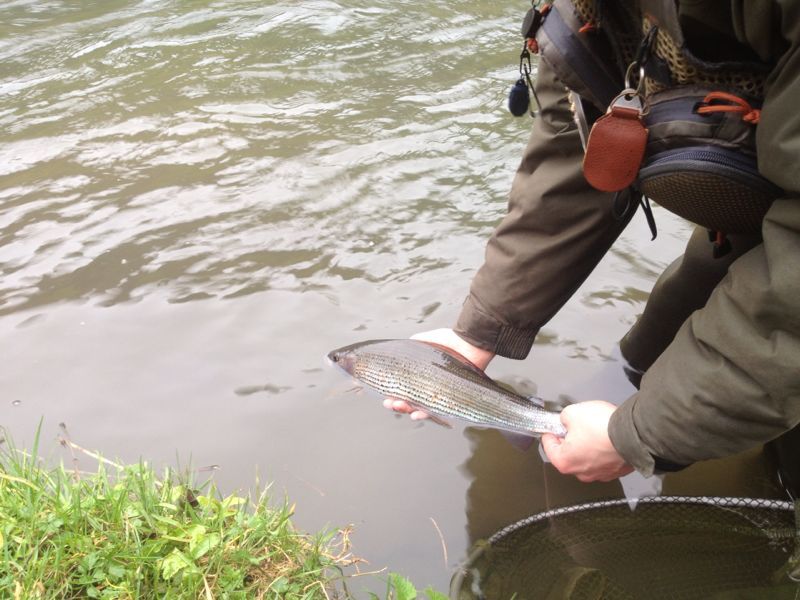
The fish was returned and we moved on. The day proved quite difficult. Mike and I fished a lot of very likely looking holes and runs and I have no doubt that we swam our flies past plenty of fish but by the end of the day I had caught three grayling; the first being the biggest. I only saw two duns on the wing and no rises.


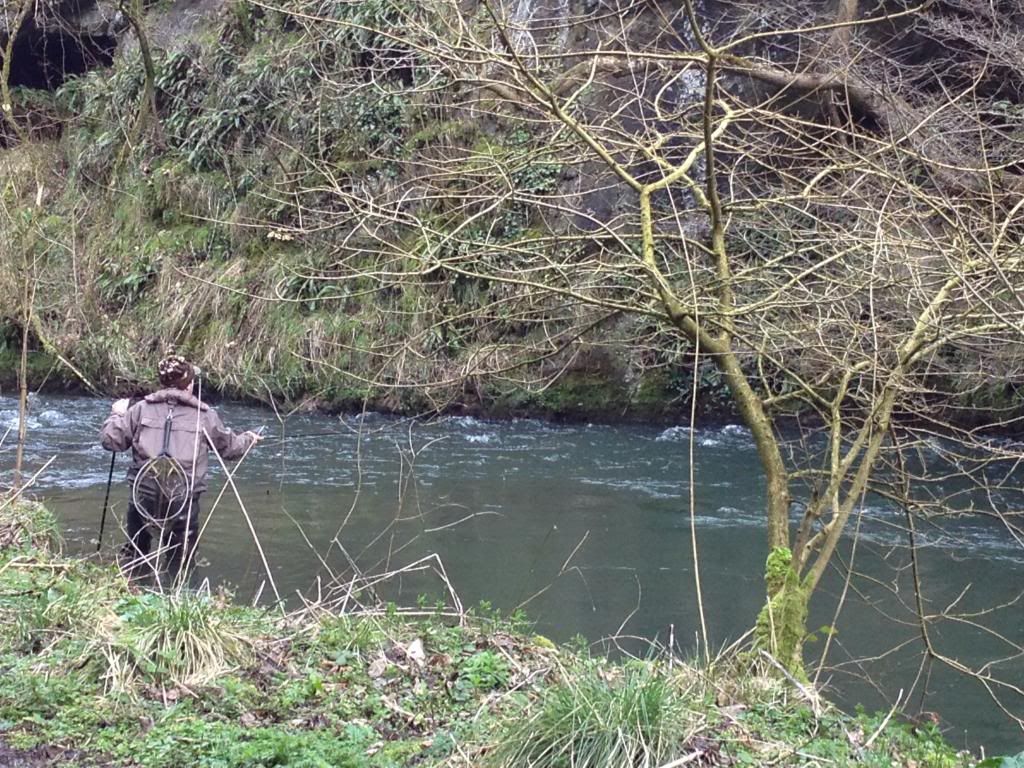
Mike fishing a cracking looking pool, I would love to swing a sculpin in here in the summer.
As it turned out we weren't the only ones to struggle that day though of course JT did far better than any of us and I was the only one who didn't catch a trout. All of my fish fell to the red tag variant and the day ended with much warmer and pleasant.

The views along the valley were breath-taking, to me anyway.
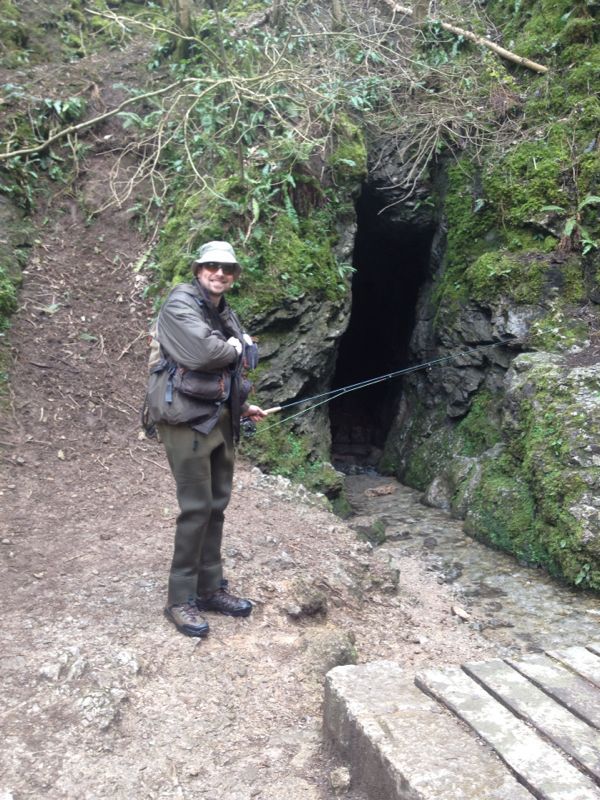
Being a tourist next to on of the many springs that feed the river.

Saturday, 8 February 2014

The Adams Family

Ask any fly fisherman to name a dry fly; what answer would you get? Greenwells Glory certainly, the Wulff series quite possibly, but I suspect the number one answer will be the Adams. If you fly fish then I'm sure you will have used one at some point and if you regularly fish rivers then I bet I can find a few in your fly box; such is the effectiveness of this fly in its many guises.

It will come to no surprise that one of the biggest selling dries is the parachute Adams, indeed one of my favourite flies is a KlinkhÄmer tied in an Adams fashion. It's grey/brown colouration has proved itself to imitate acceptably a manner of food items, but invariably its staple use is to imitate various Ephemeroptera, notably the flies fishermen call olives.

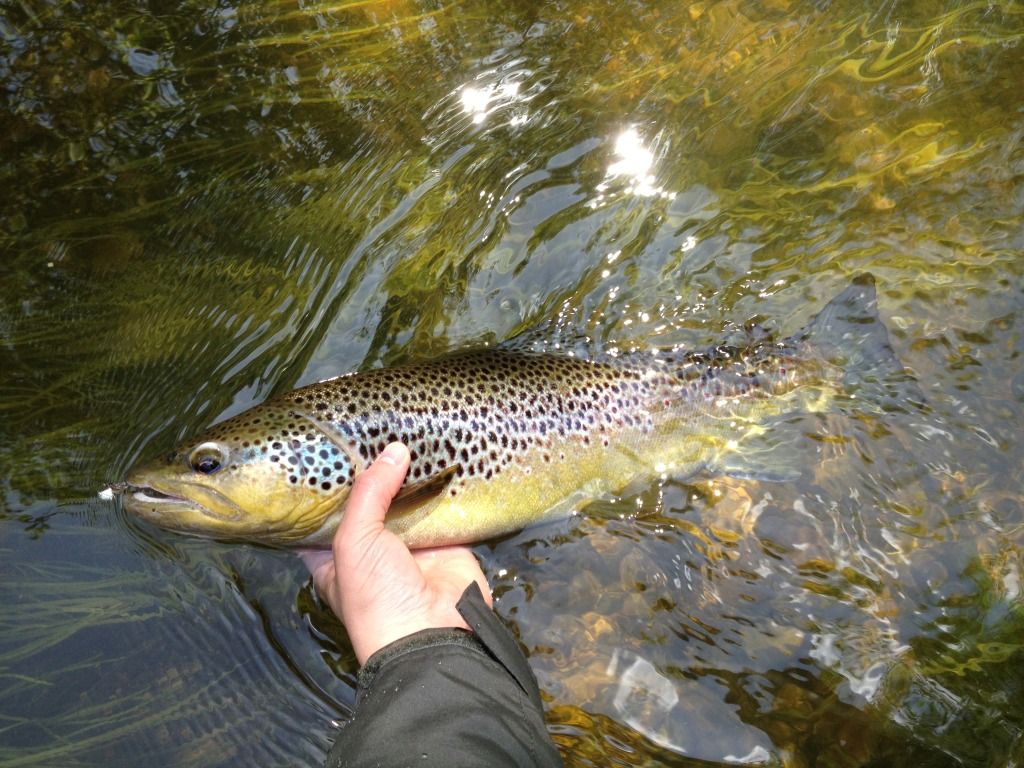
This fish fell to an Adams KlinkhÄmer, it was feeding on ascending and hatching caddis.
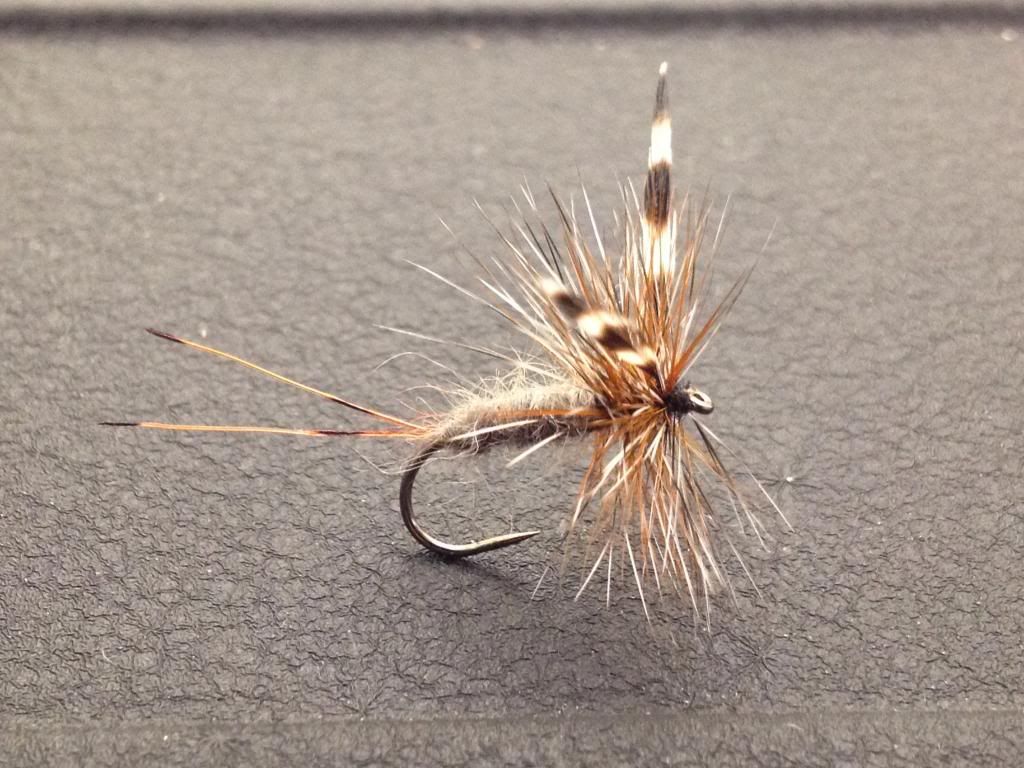
The Adams was created by Leonard Halladay in 1922 and first used my Charles F. Adams. The original pattern was tied with a chunky grey yarn body, two golden pheasant tippet fibres for the tail and the wings were tied semi-spent. The original fly's development started on the Mayfield pond, an impoundment of the Swainston Creek, but the fly became synonymous with the Boardman River; of which the Swainston Creek is a tributary. The morning after the fly's first outing Mr Adams is to have stated that the new fly was a knock out, and asked what Mr Halladay was going to name it. He said he would call it the Adams as it was Mr Adams who had the first great catch with it.

Len Halladay's original Adams, tied with muskrat body.
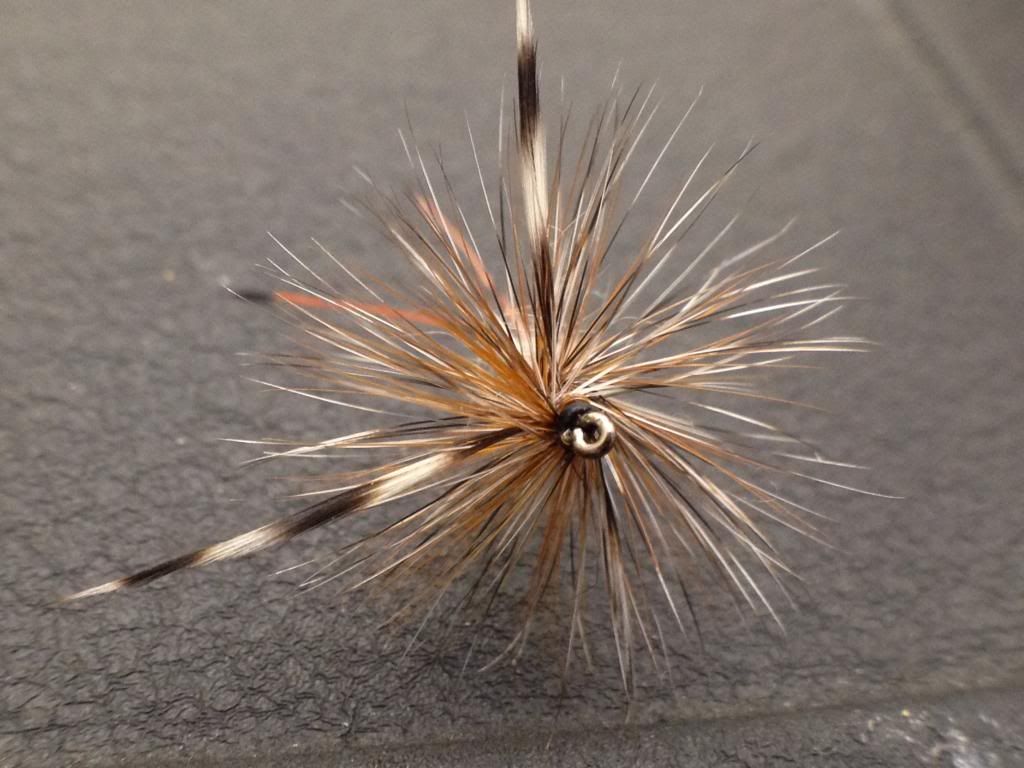
Front view showing the semi-spent wings.
As with many flies the Adams quickly began to change. In the 1920's and 30's the Adams was being moulded around the Catskill style dries; the wings drawn upright and divided with the body being trimmed down to the slim profile we recognise today. The tippet fibre tails were abandoned possibly due to a lack of support at the tail end, or simply as a result of natural progression. The now accepted grizzle/red game hackle fibre tail was pictured in Ray Bergman's Trout showing that the original tippet tail was being replaced as early as 1938.
The Adams dry fly as we know it today.
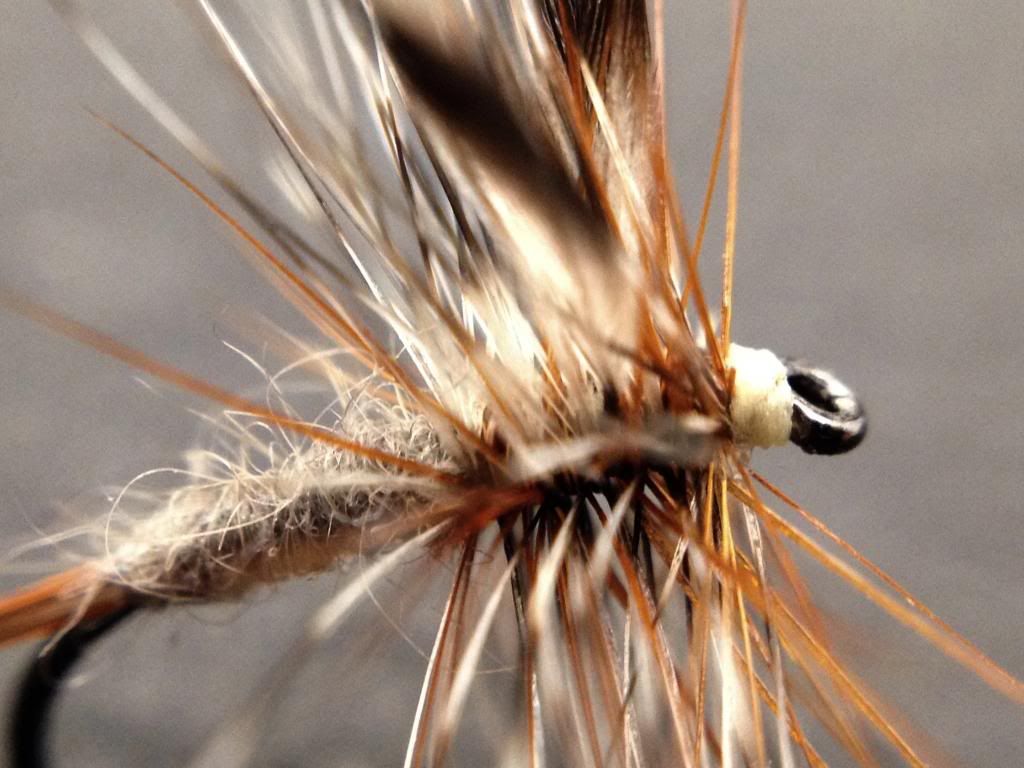
Close up of the Adams showing the red game and grizzle hackle.
So we all know what an Adams looks like but what else can we do with the dressing formula? As said at the beginning of this article the number one selling dry fly is the parachute Adams. Parachute style dries are universally popular, I like to tie mine with a dun coloured post in keeping with an olive dun theme.

The parachute Adams, the best selling dry fly.
The medium grey dun wing provides a positive trigger for fish rising to duns.
Muskrat is an excellent body material for dry flies.

I've mentioned about one of my favourite variations, the Adams klink. I have used this for a number of years as a general searching pattern that has also caught well during hatches of large dark olives.

My KlinkhÄmer Adams, if I was limited to one fly this would be it.

What about an Adams paraloop emerger. It could be tied in many different styles from a standard style dry fly with a sparkle yarn tail, to a curved hook emerger with a dense hackle keeping it afloat.

Adams paraloop emerger, the shuck is sparkle emerger yarn

Adams paraloop emerger on a grub hook, general all-round pattern.
I have recently shown on my blog my rendition of a Humpy tied as an Adams. I look forward to trying this fly out next season, with success I hope.


So they we are, one successful formula for a renowned pattern applied to other styles of flies. Imagine the possibilities every fly pattern offers, if tweaked a little; evolution is constant.

Monday, 3 February 2014

A platoon of paraduns with some forward thinking concerning general imitations

Since coming back in to fly fishing last year, I have been non-stop tying flies and filling boxes up. I have reached a point where I'm questioning, how many patterns do I need. I'm sure I'm not alone in feeling that I need this and that pattern, just in case, but how many will I really use. I have my favourite PhD along with my Barbour olive dun; these I suspect will be my mainstays throughout the season with the JT olive as a side kick. Biot bodied plume tips, Muskrax, SoS and Paraduns will be the necessary back ups.

The thing with paraduns is how many variations will you likely need? It is far too easy to fill up your fly boxes with a myriad of different colours and sizes. Simplifying things to a basic level we can group olive duns into three sizes;

Large, (16) to imitate the large dark olive; round my neck of the woods anyway.
Medium, (18) will cover medium olive, large spurwings/pale watery, iron blue and blue winged olive.
Small (20) for small dark olive, small spurwings/pale watery.

With sizes sorted out what colours should we be looking at? Perhaps we should really consider them shades as they will all be some sort olive.

Dark for large and small dark olives.
Medium for the medium olive and BWO.
Light for the spurwings/pale watery.

The iron blue requires a colour of its own due to its very specific dark colouration.

So now we have decided what colours we need, we can now combine them with the relevant sizes and decide which variations of paradun we need to tie. I have whittled down my requirements to a large and small dark paradun, and both medium and light paraduns in medium and small sizes. I haven't come across the iron blue dun, but there is no reason they don't exist in the waters I fish, and for that reason it wouldn't hurt to have a paradun to cover that eventuality.

Other considerations when tying your selection of paraduns are wing and hackle colour. Again to keep with the simple theme you need only medium dun poly yarn and medium and light dun hackles; my own are medium grey dun and light brown dun. The iron blue again needs its own materials but a dark dun hackle and wing will suffice.

I know this extremely simplified, nevertheless I feel this would cover most
situations without leaving the angler at a disadvantage.

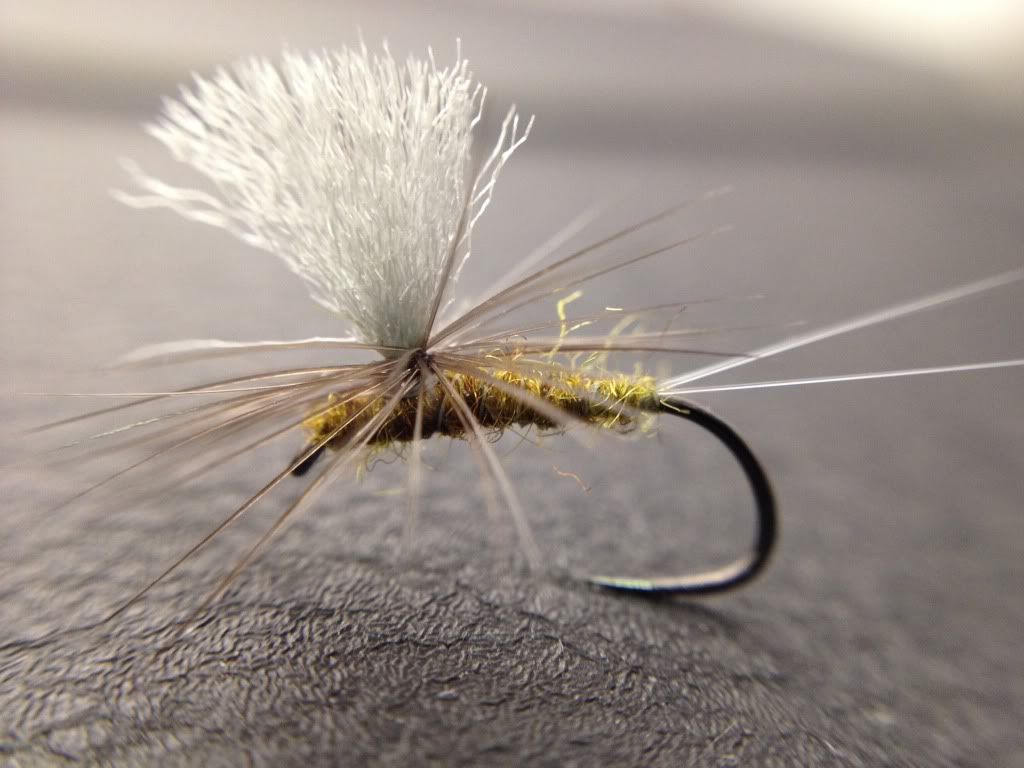
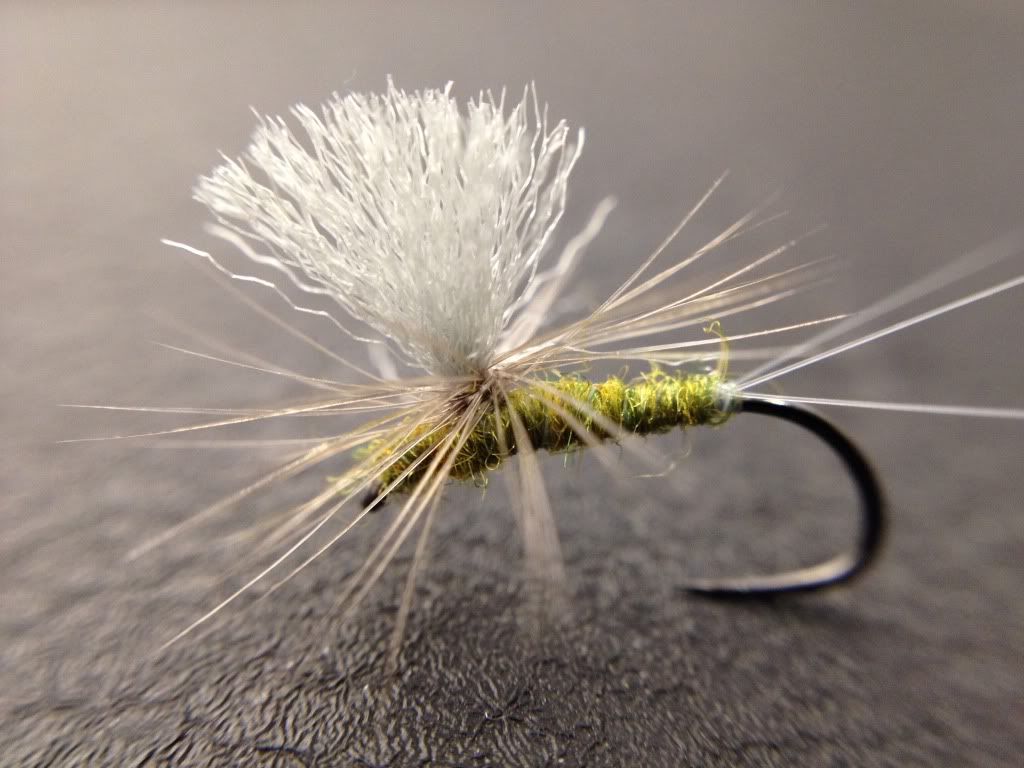
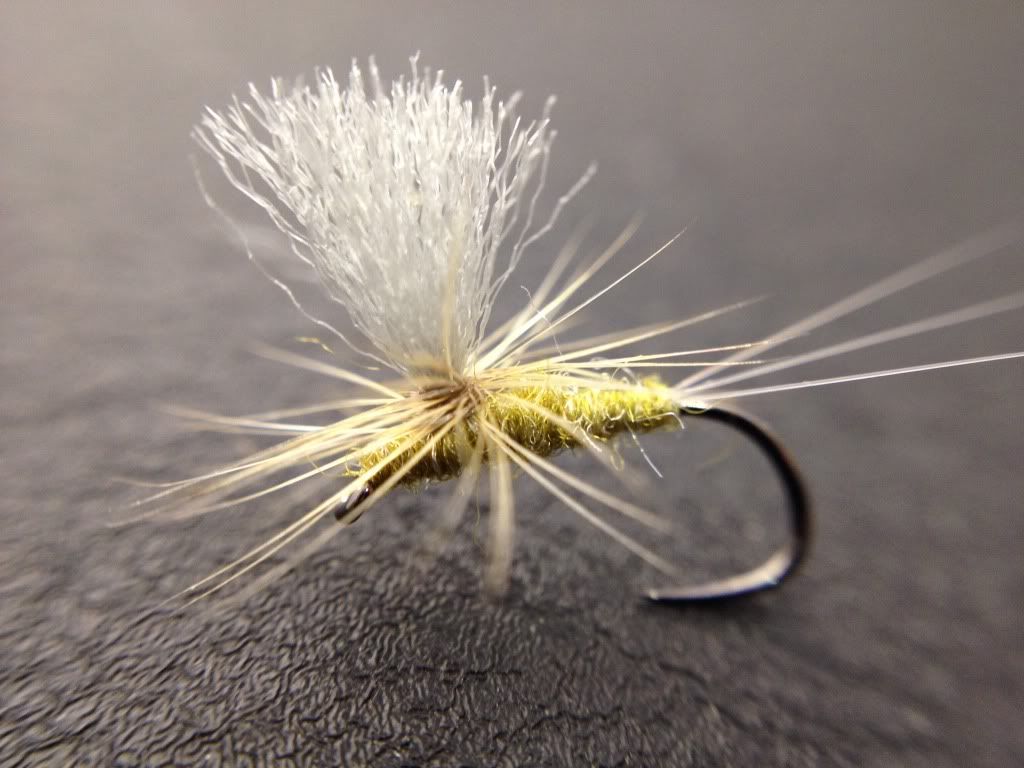
Dark paradun
Medium paradun
Light paradun
The hackle on the dark and medium paraduns came from the same cape, not sure why the hackle on the top fly looks much darker. I have used Masterclass SLF dubbing for these flies. The dark dun is colour number 01 Baetis brown olive, medium dun is number 02 Baetis green olive and the light dun is number 05 Baetis pale watery. You can find individual packs of dubbing at Funky Fly tying here.

Monday, 6 January 2014

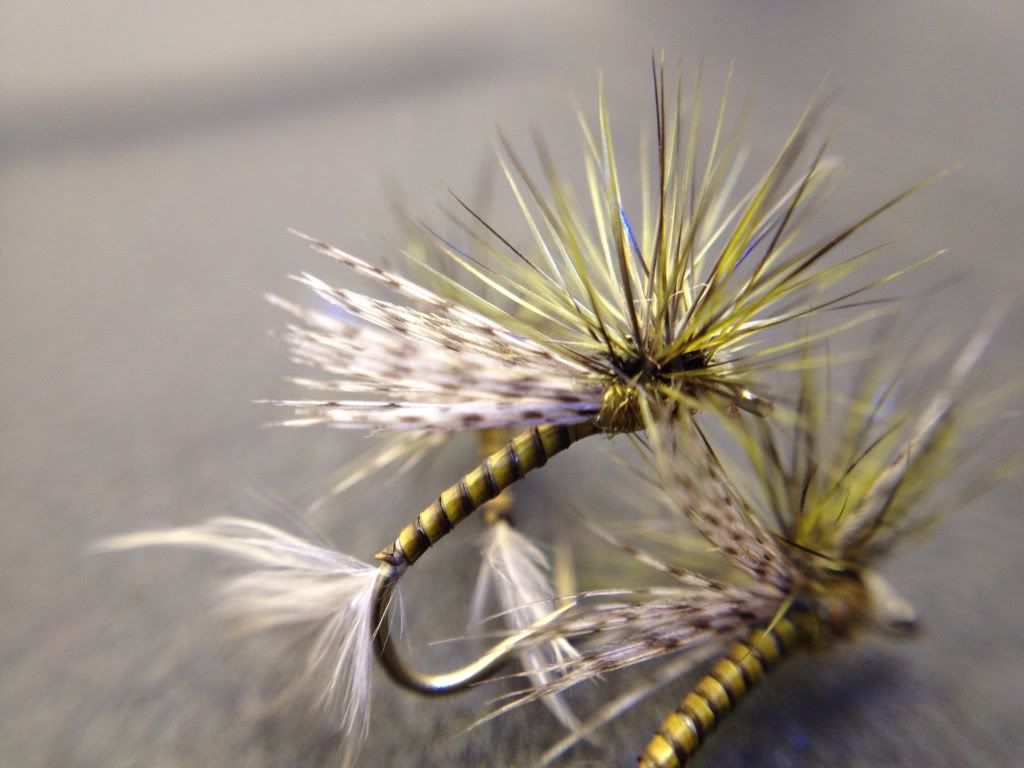
First new fly of 2014

Ok, so I know we are almost a week in to the New Year but I've been in a rut for a couple of weeks. I have struggled to get my head down and knuckle on with tying flies, not that I don't have enough already but you know how it is. Every time I've sat down to tie, and believe me that's been hard enough most of the time, I struggle to tie more than one or two flies before getting extremely fed up of my efforts. It's been that bad, honest.

So last night whilst trying to get to sleep I had a thought in my head about a fly to tie and here it is.


I have used some new hooks, these are Daiichi 1190 dry fly hooks. These are standard length hooks but I find them too long, compared to what I'm used to; in fact they are exactly the same as the Partridge barbless ideal nymph hooks, except they are a finer wire. Perfect in my mind for light nymphs and emergers with an added bonus that they go down to a size 24. You can find them here at Funky Fly Tying.


I have tied this emerger on a size 16 the hook, the shank being kinked a little where the thorax starts. A small amount of filoplume starts the fly off, this will represent the beginning of the shuck starting to separate. The body is stripped peacock quill that is dyed olive; I have used Nature's Spirit dyed peacock eyes available here.

A small amount of bunched mallard flank fibres for the wing, I have split this with the thread that forms the paraloop post.


The hackle is Whiting grizzly dyed olive. I have used a midge hackle from a quarter cape I bought from North Country Angler aka Matt Eastham, brilliant little bit of saddle, thank you Matt. The thorax is SLF masterclass colour 01 baetis dark olive.